


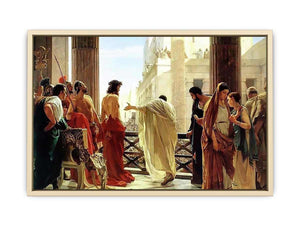


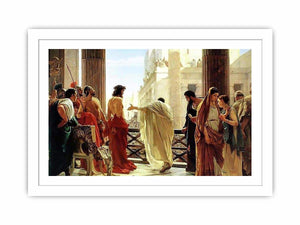
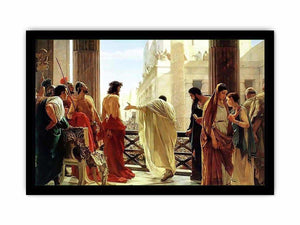

Ecce Homo by Antonio Ciseri

Ecce Homo by Antonio Ciseri
Why Choose Fame Art Gallery?
We bring you beautiful, gallery-quality art that’s ready to hang and made to last.
🖼️ Stretched Canvas Prints
Our stretched canvas prints are crafted on premium 400-450 GSM polycotton canvas, the same used in top museums. Printed with fade-resistant, eco-friendly inks, each piece is scratch-resistant and made to last a lifetime. Mounted on FSC-certified wood frames from sustainable forests, every canvas includes rubber bumpers to protect your walls and hang straight.
🖼️ Floating Frame Canvas Prints
Want a more elegant touch? Our floating frame canvases feature a slim black or white box frame with a subtle gap around the canvas, creating a modern shadow effect. It’s a clean, classy finish that elevates any space.
🖼️ Framed Paper Prints
Printed on archival-grade velvet matte paper with cutting-edge technology for vibrant colors and sharp detail. Housed in durable pine wood frames with shatterproof plexiglass—these are perfect for a sleek, modern look. Prefer glossy paper? Just mention it in your order comments or email us within 24 hours!
🖼️ Rolled Canvas Prints
Love to frame your own way? Our rolled canvas prints are printed on the same high-quality canvas—perfect for custom framing. Museum-grade finish, vivid color, and built to last. Every artwork is printed on 400-450 GSM premium canvas with UL Greenguard Gold Certified inks—eco-friendly, water-resistant, fade-proof, and built to last.
🎨 Hand-Painted Oil Paintings & Custom Art
Looking for something unique? Our oil paintings are 100% hand-painted by skilled artists. We also offer custom sizes and commissioned art—just contact us via live chat or email.
Best Quality Guaranteed ✅
Fame Art Gallery is where art meets quality. Ready to decorate your space? Start shopping today and experience art that speaks to you.
Buy Ecce Homo by Antonio Ciseri Canvas Prints & Oil Painting Reproduction
Introduction
A moment of silence before judgment—this artwork feels powerful and deeply moving. This painting is famous because it captures emotion, tension, and spiritual intensity with striking realism.
About the Painting
Ecce Homo by Antonio Ciseri (1871) is a monumental Academic masterpiece depicting Pontius Pilate presenting Christ to the crowd. The composition is dramatic and contemplative, with a unique perspective from behind the figures, drawing the viewer into the scene. Ciseri’s precision, lighting, and emotional depth make this artwork perfect for buyers looking to buy canvas prints, oil painting reproduction, or meaningful wall art that adds spiritual depth, history, and artistic elegance to home decor.
Key Features
- Available as premium canvas prints or hand-painted oil painting reproduction
- Dramatic composition with strong perspective and emotional depth
- Multiple size options in inches for living room, study, or devotional decor
- Gallery-wrapped canvas ready to hang instantly
- Optional framing for a refined, museum-quality finish
- Fast USA & worldwide delivery for seamless shopping
Canvas Prints vs Hand-Painted Oil Paintings
Canvas prints highlight the clarity and dramatic lighting with modern precision. Hand-painted oil painting reproduction adds texture and depth, enhancing the realism and impact. Explore the canvas prints vs oil paintings comparison guide to choose your ideal format.
Where This Artwork Works Best
This powerful and contemplative piece enhances living rooms, study spaces, and spiritual interiors. It creates a profound focal point and pairs beautifully with classic, traditional, or minimalist decor. Use the accurate wall art size guide calculator tool or explore wall art placement guide for perfect positioning for styling guidance.
Why Choose This Artwork
This Ciseri masterpiece stands out for its emotional intensity and perspective. It brings depth, reflection, and artistic brilliance into your space. Discover more in the classic academic and Renaissance paintings collection to elevate your decor.
Buying Guide
Choose large sizes (40–70 inches) to fully experience its detail and emotional impact. Canvas prints suit modern interiors, while oil painting reproductions provide a richer, authentic feel. Learn more in the complete wall art buying guide to select the perfect option.
FAQS
- Why is Ecce Homo by Ciseri so famous? It’s known for its dramatic perspective and realism. The scene feels powerful and reflective.
- Is this painting suitable for spiritual decor? Yes, it adds depth and meaning. Perfect for devotional spaces.
- What size works best for this artwork? Large sizes are ideal. They showcase the full composition beautifully.
- Can I buy Ecce Homo canvas prints online? Yes, premium canvas prints are available. They are durable and ready to hang.
- Is oil painting reproduction worth it? Yes, it adds texture and authenticity. It enhances the dramatic impact.
- Where should I hang this artwork? Ideal for living rooms or study areas. It creates a powerful focal point.
- Does this artwork match traditional interiors? Yes, it blends beautifully. It adds elegance and depth.
- How fast is delivery in the USA? Fast USA & worldwide delivery ensures quick arrival. Your artwork is ready to transform your space.
| 1. Select Type |
Canvas Print, Unframed Paper Print, Hand-Painted Oil Painting, Framed Paper Print |
|---|---|
| 2. Select Finish Option |
Rolled Canvas, Rolled- No Frame, Streched Canvas, Black Floating Frame, White Floating Frame, Brown Floating Frame, Black Frame with Matt, White Frame with Matt, Black Frame No Matt, White Frame No Matt, Streched, Natural Floating Frame, Champagne Floating Frame, Gold Floating Frame |
| 3. Select Size |
60cm X 90cm [24" x 36"], 76cm X 114cm [30" x 45"], 82cm X 120cm [32" x 48"], 100cm X 150cm [40" x 60"], 16.54 x 11.69"(A3), 23.39 x 16.54"(A2), 33.11 x 23.39"(A1), 46.81 x 31.11"(A0), 54" X 36", 50cm X 60cm [16" x 24"], 121cm X 182cm [48" x 72"], 135cm X 200cm [54" x 79"], 165cm x 205cm [65" x 81"], 183cm x 228cm [72" x 90"], 22cm X 30cm [9" x 12"], 30cm x 45Cm [12" x 18"], 45cm x60cm [16" x 24'], 75cm X 100cm [30" x 40"], 121cm x 193cm [48" x 76"], 45cm x 60cm [16" x 24'], 20cm x 25Cm [8" x 10"], 35cm x 50Cm [14" x 20"], 45cm x 60 cm [18" x 24"], 35cm x 53Cm [14" x 21"], 66cm X 101cm[26" x 40"], 76cm x 116cm [30"x 46"], 50cm X 60cm 16" x 24"] |