

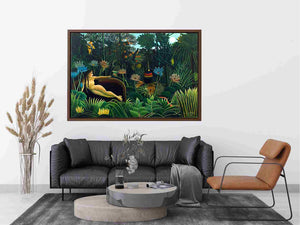
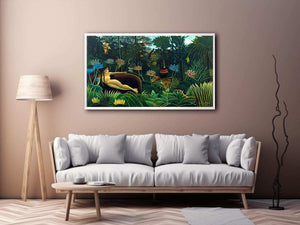
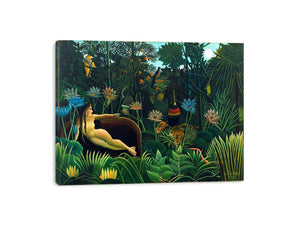
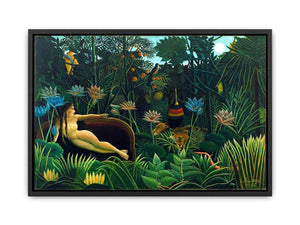
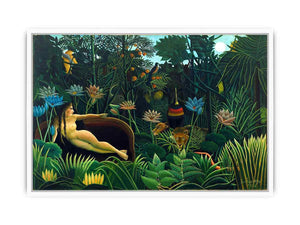
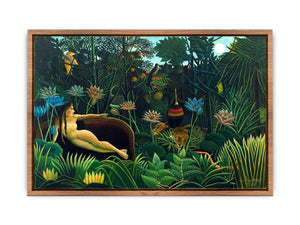
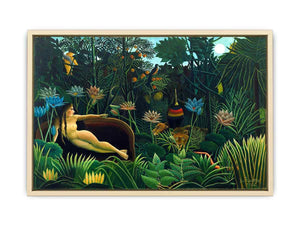
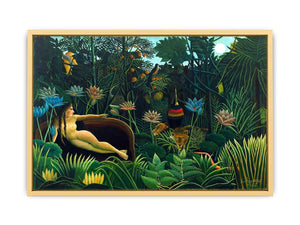
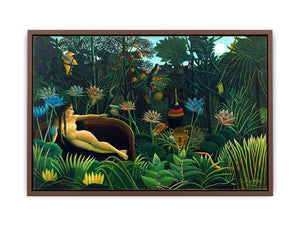
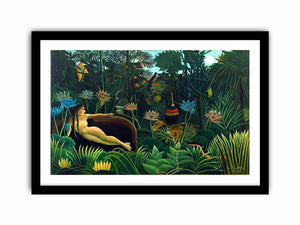
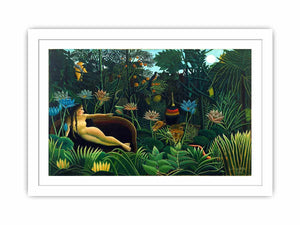
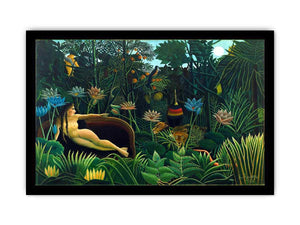
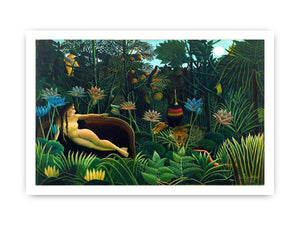
The Dream by Henri Rousseau

The Dream by Henri Rousseau
Museum-Quality Art, Made for Your Home
Beautiful art deserves exceptional craftsmanship. At Fame Art Gallery, we create premium canvas prints, framed art prints, fine art prints and metal prints with stunning colour, beautiful detail and professional finishing. Discover artwork you'll be proud to display.
Discover Your Perfect Art Finish
Explore our premium finishes and choose the look you'll love.
Stretched Canvas Prints Classic Gallery Finish +
Bring timeless elegance to your walls with museum-quality canvas prints. Enjoy rich colours, beautiful detail and an authentic textured canvas finish.
Each artwork is professionally stretched over a sturdy wooden frame and arrives ready to display.
Floating Frame Canvas Premium Gallery Look +
Make your favourite artwork truly stand out. Our premium floating frame canvas prints combine beautiful textured canvas with elegant black or white frames.
A subtle floating effect creates a refined, gallery-inspired presentation that brings sophistication and depth to your space.
Fine Art Prints Luxurious Velvet Matte +
Experience the refined beauty of premium archival fine art paper. Its luxurious velvet-matte finish showcases delicate details, rich tones and beautiful colour without distracting shine.
Satin Photo Prints Beautiful Semi-Gloss +
Bring vibrant artwork to life with brilliant colours, crisp details and a beautiful soft sheen. Our premium satin photo prints deliver an elegant, polished appearance without the intense shine of glossy paper.
Framed Art Prints Two Beautiful Paper Options +
Beautiful art deserves beautiful framing. Our premium framed art prints feature elegant genuine wood frames in classic black or white, professionally finished for a timeless gallery appearance.
Choose Your Paper Finish:
A luxurious archival paper with a refined, non-glossy finish. Perfect for classic paintings and elegant interiors.
Brilliant colours, beautiful clarity and a soft sheen. Perfect for colourful artwork, landscapes and photography.
Both options feature premium wood framing, protective shatter-resistant glazing and professional finishing.
Glossy Metal Prints Brilliant Modern Finish +
Experience exceptional colour vibrancy, crisp detail and a brilliant high-gloss finish. Our premium metal prints create a striking, contemporary look with a sleek floating display.
Hand-Painted Oil Paintings Authentic Artist Craftsmanship +
Experience the beauty of authentic hand-painted art. Individually created by skilled artists, every painting features real brushstrokes, rich texture and beautiful depth.
Which Art Finish Is Right for You?
A simple guide to choosing your perfect finish.
| Art Finish | Best For | Appearance |
|---|---|---|
| Floating Frame Canvas | Premium statement walls | Elegant, framed & textured |
| Stretched Canvas | Classic wall art | Textured gallery look |
| Framed Fine Art | Classic paintings | Luxurious velvet matte |
| Framed Satin Photo | Colourful artwork | Elegant semi-gloss |
| Glossy Metal | Modern statement art | Brilliant high gloss |
| Hand-Painted Oil | Traditional fine art | Authentic brushstroke texture |
✦ The Fame Art Gallery Difference ✦
Frequently Asked Questions
Everything you need to choose with confidence.
What's the difference between Fine Art and Satin Photo prints?
Fine Art prints feature a luxurious velvet-matte surface with no glossy sheen. Satin Photo prints offer vibrant colours with a subtle semi-gloss finish. Both are available as beautifully framed prints.
Are stretched canvas prints ready to hang?
Yes. Our stretched canvas prints arrive professionally stretched and ready to hang. Floating frame canvas prints also arrive framed and ready to display.
Which finish is best for colourful artwork?
Satin Photo prints are excellent for vibrant colours and crisp detail. For a more dramatic, high-gloss contemporary look, choose our glossy metal prints.
What makes floating frame canvas different?
Floating frame canvas combines a premium stretched canvas print with an elegant outer frame. The small gap around the canvas creates a beautiful floating effect for a refined gallery look.
Are framed prints ready to hang?
Yes. Both Framed Fine Art and Framed Satin Photo prints are professionally framed and arrive ready to hang.
Your Walls Deserve Something Extraordinary.
The right artwork can transform a room,
reflect your personality and make
your home feel truly special.
Choose your favourite artwork, select
the size and finish you love, and let
Fame Art Gallery create
something beautiful for your walls.
The Dream by Henri Rousseau Canvas Prints & Oil Painting Reproduction
Introduction
Surreal, lush, and unforgettable—The Dream transports you into a mysterious jungle filled with imagination and wonder. This iconic artwork doesn’t just hang on your wall—it creates a dreamlike atmosphere that captures attention and curiosity instantly.About the Painting
This painting is famous because it blends fantasy with reality, placing a reclining figure within a dense, exotic jungle. Created by Henri Rousseau, the composition features rich foliage, hidden animals, and a dreamlike stillness that feels both calm and mysterious. It stands out for its imaginative setting, detailed greenery, and symbolic narrative. The artwork reflects Rousseau’s unique style—naïve yet powerful, simple yet deeply evocative.Key Features
- Museum-quality 400–450 GSM canvas for premium durability and texture
- Available as canvas prints, framed wall art, and 100% hand-painted oil reproductions
- High-definition detail capturing lush foliage, figures, and vivid tones
- Locally produced with fast USA & worldwide delivery
- Ready-to-hang options for effortless installation
Canvas Prints vs Hand-Painted Oil Paintings
Canvas prints offer vivid clarity and rich color—ideal for modern interiors. Hand-painted oil reproductions bring texture, depth, and a richer artistic presence. Oil enhances foliage detail and atmosphere, while canvas offers a clean and versatile display.Where This Artwork Works Best
This bold and imaginative piece is perfect for living rooms, bedrooms, and creative spaces. It complements modern, eclectic, and artistic home decor styles, adding depth and visual intrigue. Explore more in our famous paintings collection or browse our wall art collection for inspiration.Why Choose This Artwork
Owning this piece means bringing imagination, mystery, and artistic originality into your home. With premium craftsmanship, museum-quality materials, and fast USA & worldwide delivery, it’s designed to inspire and stand out.Buying Guide
Choose 30–48 inch sizes for a bold focal point in your living room or bedroom. Hang at eye level with soft, directional lighting to enhance its depth and detail. Use our wall art size guide or explore expert styling advice in our ultimate wall art guide.FAQS
- Why is The Dream by Rousseau so famous? It’s known for its surreal jungle scene and imaginative style. The artwork feels mysterious and unique.
- Is this artwork suitable for modern interiors? Yes, it adds creativity and depth. It creates a bold focal point.
- What size works best for this painting? Larger sizes enhance its immersive effect, while medium sizes suit smaller rooms. It depends on your space.
- What makes this painting unique? Its blend of fantasy and nature stands out. It feels like a visual dream.
- Should I choose canvas or oil painting reproduction? Canvas prints offer clarity, while oil paintings add texture and richness. Each creates a different visual experience.
- Where should I hang this artwork? It works best in living rooms, bedrooms, or creative spaces. Placement enhances its impact.
- Can I buy this as framed wall art? Yes, framed options are available for a refined finish. The frame enhances its presentation.
- Does this artwork create a focal point? Yes, it naturally draws attention. Its surreal style makes it visually striking.
| 1. Select Type |
Canvas Print, Unframed Paper Print, Hand-Painted Oil Painting, Framed Paper Print |
|---|---|
| 2. Select Finish Option |
Rolled Canvas, Rolled- No Frame, Streched Canvas, Black Floating Frame, White Floating Frame, Brown Floating Frame, Black Frame with Matt, White Frame with Matt, Black Frame No Matt, White Frame No Matt, Streched, Natural Floating Frame, Champagne Floating Frame, Gold Floating Frame |
| 3. Select Size |
60cm X 90cm [24" x 36"], 76cm X 114cm [30" x 45"], 82cm X 120cm [32" x 48"], 100cm X 150cm [40" x 60"], 16.54 x 11.69"(A3), 23.39 x 16.54"(A2), 33.11 x 23.39"(A1), 46.81 x 31.11"(A0), 54" X 36", 50cm X 60cm [16" x 24"], 121cm X 182cm [48" x 72"], 135cm X 200cm [54" x 79"], 165cm x 205cm [65" x 81"], 183cm x 228cm [72" x 90"], 22cm X 30cm [9" x 12"], 30cm x 45Cm [12" x 18"], 45cm x60cm [16" x 24'], 75cm X 100cm [30" x 40"], 121cm x 193cm [48" x 76"], 45cm x 60cm [16" x 24'], 20cm x 25Cm [8" x 10"], 35cm x 50Cm [14" x 20"], 45cm x 60 cm [18" x 24"], 35cm x 53Cm [14" x 21"], 66cm X 101cm[26" x 40"], 76cm x 116cm [30"x 46"], 50cm X 60cm 16" x 24"] |