


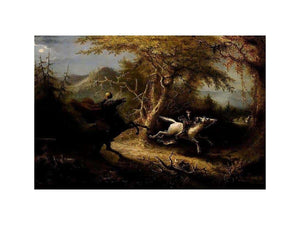


The Headless Horseman by JOHN QUIDOR

The Headless Horseman by JOHN QUIDOR
Why Choose Fame Art Gallery?
We bring you beautiful, gallery-quality art that’s ready to hang and made to last.
🖼️ Stretched Canvas Prints
Our stretched canvas prints are crafted on premium 400-450 GSM polycotton canvas, the same used in top museums. Printed with fade-resistant, eco-friendly inks, each piece is scratch-resistant and made to last a lifetime. Mounted on FSC-certified wood frames from sustainable forests, every canvas includes rubber bumpers to protect your walls and hang straight.
🖼️ Floating Frame Canvas Prints
Want a more elegant touch? Our floating frame canvases feature a slim black or white box frame with a subtle gap around the canvas, creating a modern shadow effect. It’s a clean, classy finish that elevates any space.
🖼️ Framed Paper Prints
Printed on archival-grade velvet matte paper with cutting-edge technology for vibrant colors and sharp detail. Housed in durable pine wood frames with shatterproof plexiglass—these are perfect for a sleek, modern look. Prefer glossy paper? Just mention it in your order comments or email us within 24 hours!
🖼️ Rolled Canvas Prints
Love to frame your own way? Our rolled canvas prints are printed on the same high-quality canvas—perfect for custom framing. Museum-grade finish, vivid color, and built to last. Every artwork is printed on 400-450 GSM premium canvas with UL Greenguard Gold Certified inks—eco-friendly, water-resistant, fade-proof, and built to last.
🎨 Hand-Painted Oil Paintings & Custom Art
Looking for something unique? Our oil paintings are 100% hand-painted by skilled artists. We also offer custom sizes and commissioned art—just contact us via live chat or email.
Best Quality Guaranteed ✅
Fame Art Gallery is where art meets quality. Ready to decorate your space? Start shopping today and experience art that speaks to you.
Buy The Headless Horseman by John Quidor – Canvas Prints & Oil Painting Reproductions
Introduction
Mysterious, haunting, and full of dark energy—this artwork brings legend to life in a powerful way. Looking for wall art that sparks intrigue and stands out instantly? This is it. This painting is famous because it captures the eerie legend of the Headless Horseman with dramatic storytelling.
About the Painting
“The Headless Horseman” by John Quidor is inspired by Washington Irving’s tale of Sleepy Hollow, portraying the terrifying figure riding through a shadowy landscape. Quidor’s expressive style and moody tones create a sense of suspense and motion, making the scene feel alive. This artwork is perfect for those who appreciate storytelling, folklore, and bold, atmospheric wall art.
Key Features
- Available as premium canvas prints and hand-painted oil painting reproductions
- High-resolution detail capturing dramatic lighting and movement
- Multiple size options in inches for perfect wall placement
- Fade-resistant colors for long-lasting quality
- Ready-to-hang options for easy installation
- Fast USA & worldwide delivery
Canvas Prints vs Hand-Painted Oil Paintings
Canvas prints provide a sleek, modern finish with crisp detail—ideal for contemporary interiors. Hand-painted oil painting reproductions offer texture and depth, enhancing the dark, atmospheric mood of the scene. Choose oil paintings for authenticity and richness, or canvas prints for a clean and affordable wall art option.
Where This Artwork Works Best
This dramatic artwork is perfect for living rooms, offices, and themed spaces, adding mystery and character. It works especially well in creative interiors or areas where you want a bold focal point. Use this wall art size guide calculator to find the ideal size and explore this ultimate wall art guide for expert placement tips.
Why Choose This Artwork
This is more than wall decor—it’s a piece of storytelling that brings legend and atmosphere into your home. Its dark tones and dynamic composition make your space feel unique and captivating. Ideal for those who want striking and memorable wall art.
Buying Guide
Choose larger sizes (36–60 inches) for living rooms to create a powerful focal point. Medium sizes work well in offices or personal spaces for a balanced look. Pair with subtle lighting to enhance its dramatic mood. Learn more in this guide on how to choose wall art and compare finishes in canvas prints vs oil paintings before purchasing.
FAQS
- Why is The Headless Horseman by Quidor so popular? It’s loved for its connection to a famous legend. The eerie atmosphere draws viewers in instantly.
- Is this artwork suitable for modern interiors? Yes, it adds bold character to modern spaces. It creates a striking focal point.
- What size should I choose for my living room? Larger sizes (36–60 inches) provide the best impact. They highlight the dramatic scene.
- Are oil painting reproductions worth it? Yes, they offer texture and depth for a premium feel. Ideal for collectors.
- How fast is delivery in the USA? Orders are shipped quickly with fast USA & worldwide delivery. Timing may vary slightly.
- Can this artwork be used in themed decor? Absolutely, it’s perfect for gothic or storytelling-inspired spaces. It enhances the atmosphere.
- Does the canvas print look realistic? Yes, high-resolution printing ensures accurate detail and tone. It closely resembles the original.
- Is this a good gift option? Definitely, it’s a unique and memorable choice. Perfect for fans of folklore and art.
| 1. Select Type |
Canvas Print, Unframed Paper Print, Hand-Painted Oil Painting, Framed Paper Print |
|---|---|
| 2. Select Finish Option |
Rolled Canvas, Rolled- No Frame, Streched Canvas, Black Floating Frame, White Floating Frame, Brown Floating Frame, Black Frame with Matt, White Frame with Matt, Black Frame No Matt, White Frame No Matt, Streched, Natural Floating Frame, Champagne Floating Frame, Gold Floating Frame |
| 3. Select Size |
60cm X 90cm [24" x 36"], 76cm X 114cm [30" x 45"], 82cm X 120cm [32" x 48"], 100cm X 150cm [40" x 60"], 16.54 x 11.69"(A3), 23.39 x 16.54"(A2), 33.11 x 23.39"(A1), 46.81 x 31.11"(A0), 54" X 36", 50cm X 60cm [16" x 24"], 121cm X 182cm [48" x 72"], 135cm X 200cm [54" x 79"], 165cm x 205cm [65" x 81"], 183cm x 228cm [72" x 90"], 22cm X 30cm [9" x 12"], 30cm x 45Cm [12" x 18"], 45cm x60cm [16" x 24'], 75cm X 100cm [30" x 40"], 121cm x 193cm [48" x 76"], 45cm x 60cm [16" x 24'], 20cm x 25Cm [8" x 10"], 35cm x 50Cm [14" x 20"], 45cm x 60 cm [18" x 24"], 35cm x 53Cm [14" x 21"], 66cm X 101cm[26" x 40"], 76cm x 116cm [30"x 46"], 50cm X 60cm 16" x 24"] |