
Cubism Art & Paintings | Cubist Wall Art & Modern Artwork | Fame Art Gallery


Violinist (Original) Painting


Concierto (Original) Painting


Wine Garden Mosaic

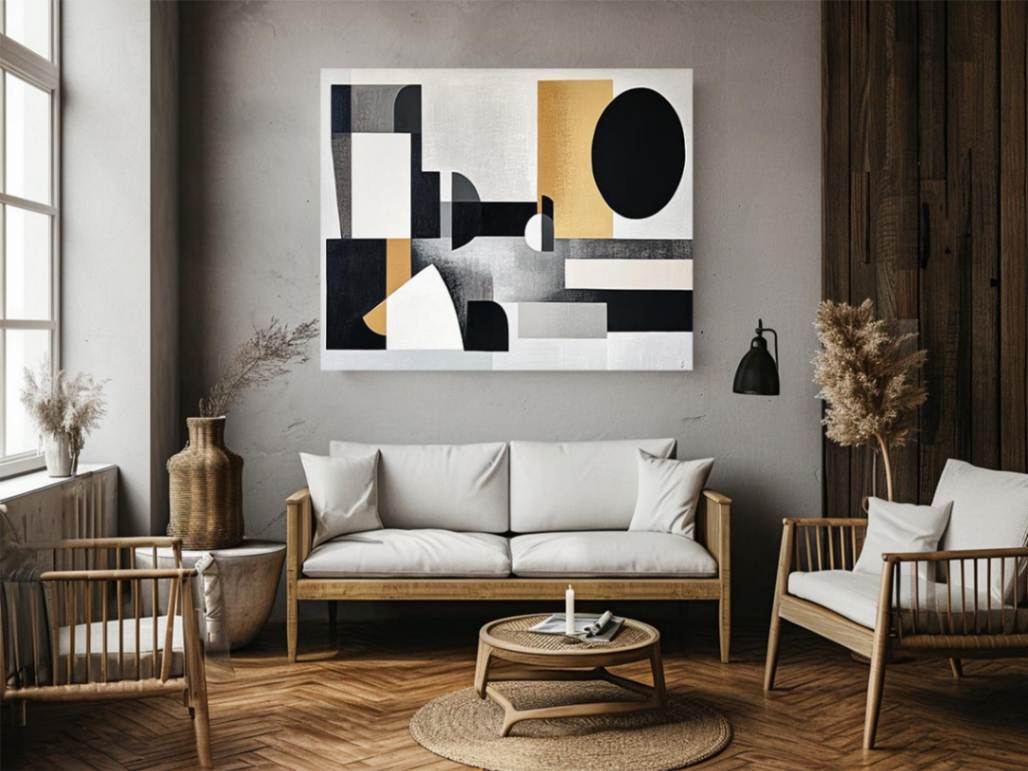
Golden Geometry


Eclipsed In Rainbows


Cubist Serenade


Cubist Whispers


Queen of the Meadow (Original) Painting


Echoes of the Soul (Original) Painting


Melody in Motion (Original) Painting


Stylish Attir (Original) Painting


Perfromance (Original) Painting


Fiddle (Original) Painting


Musical Mind (Original) Painting


Pablo Inspired (Original) Painting


Boat Ride (Original) Painting


Picasso Inspired (Original) Painting


Cello (Original) Painting


Talk (Original) Painting


Talk (Original) Painting


Violin and Vintage Wine Harmony
Cubist Midnight Cat


Dreams in Geometry


Prism Fruit Composition


Cubist Citrus Harmony

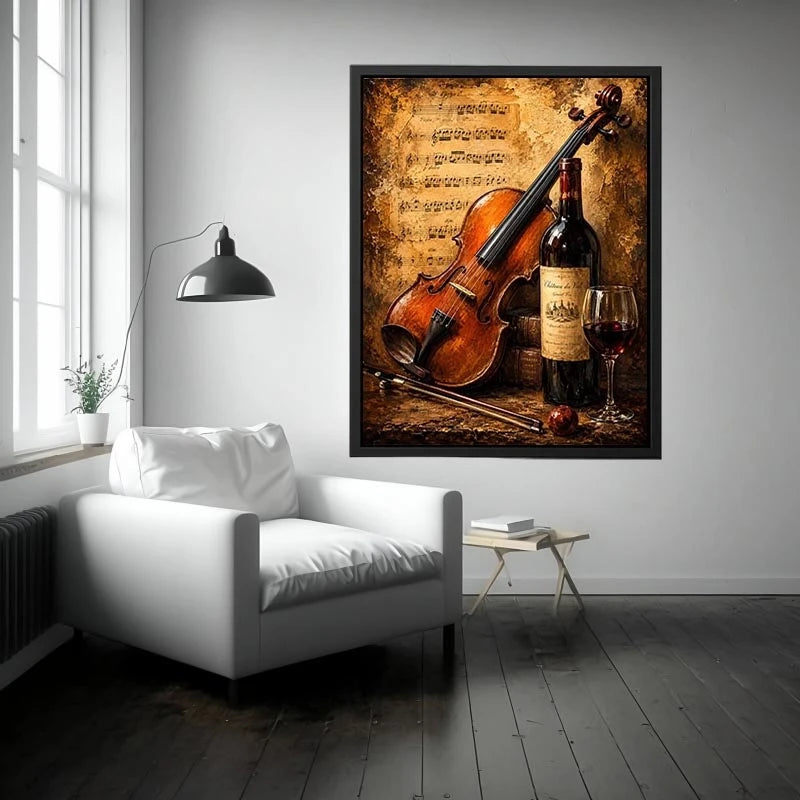
Symphony & Merlot

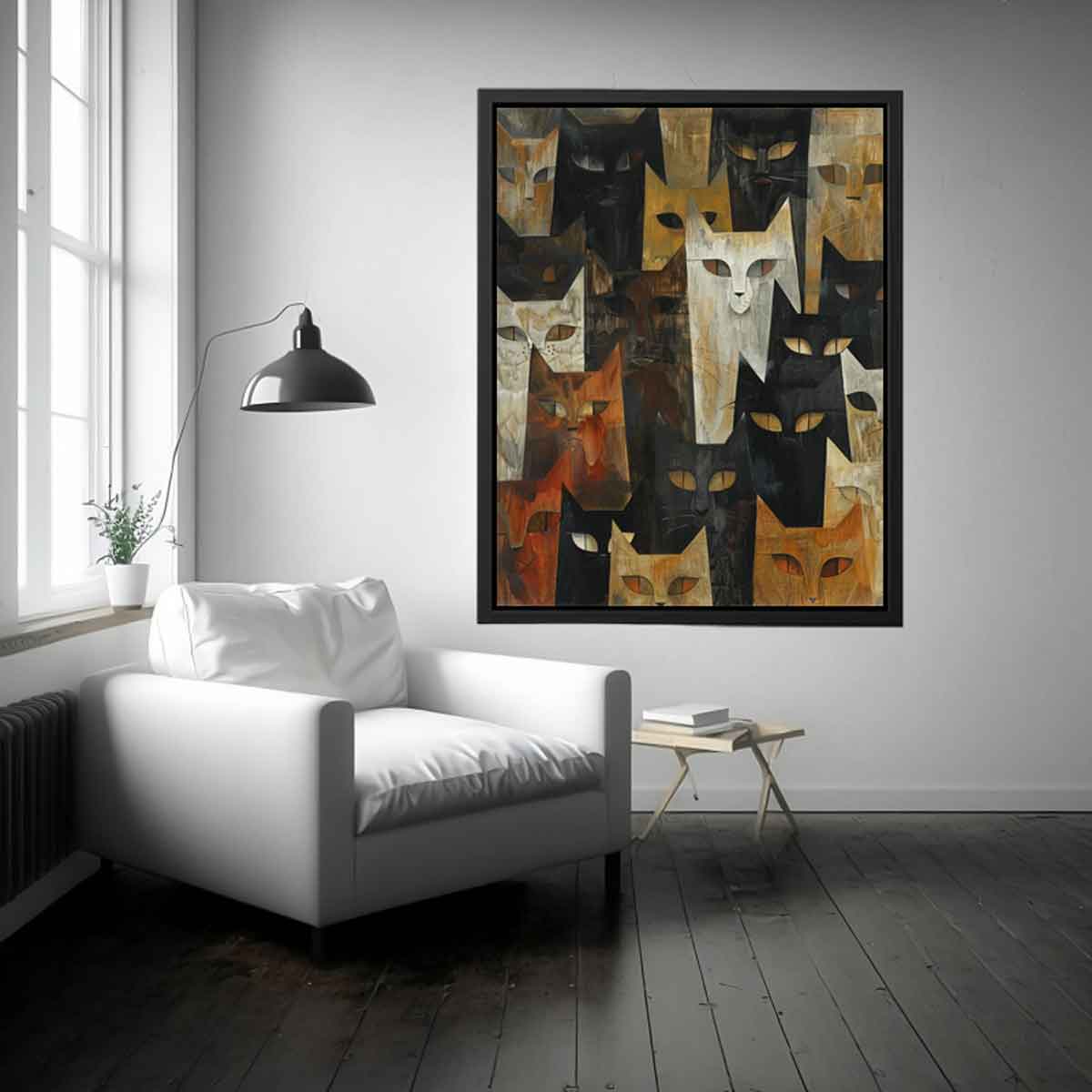
Cubism Cats


Cubist Symphony

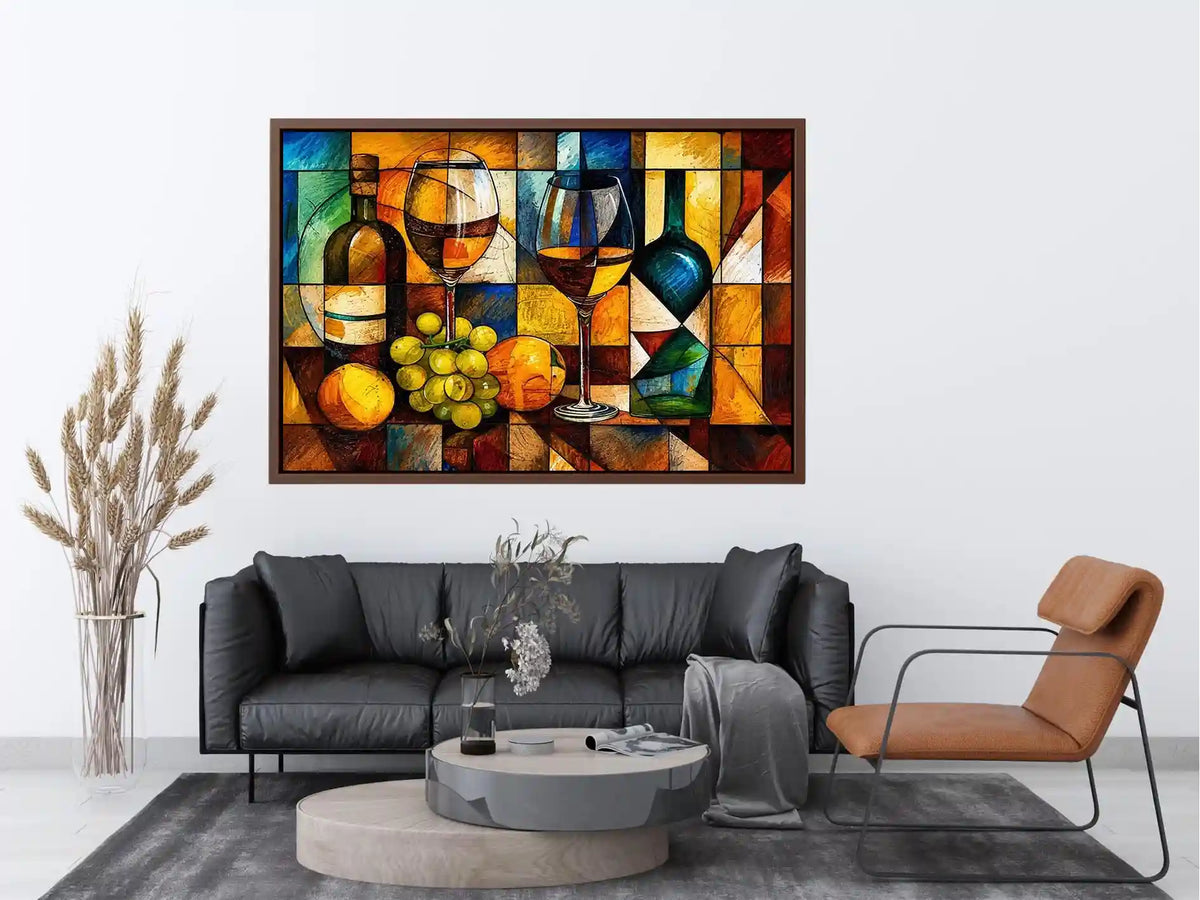
Golden Cellar Harmony


Leaded Introspection


Prisms of Identity


Cubist Muse


The Angled Breath


Cubist Portrait


Two Women Modern Art Painting


Fragmented Faces


Cubist Harmony
Cubism Art & Paintings
Discover Cubism Art at Fame Art Gallery, featuring geometric forms, fragmented perspectives, multiple viewpoints and bold compositions inspired by one of the most influential movements in modern art. Cubist artwork transformed traditional approaches to representing people, objects and space by breaking subjects into simplified geometric forms and presenting different viewpoints within a single composition. Explore Cubism-inspired wall art for living rooms, bedrooms, dining rooms, home offices, hallways, galleries and contemporary Australian interiors.
Shop Cubism Art
Cubism was an influential avant-garde art movement that emerged in the early twentieth century and fundamentally changed how artists approached form, perspective and pictorial space.
Rather than representing subjects from a single fixed viewpoint, Cubist artists explored fragmented forms, overlapping planes, geometric structures and multiple perspectives.
Shop Cubism Art to explore the collection.
What Is Cubism Art?
Cubism art is characterised by the simplification and fragmentation of subjects into geometric shapes, planes and overlapping forms.
The movement challenged conventional Renaissance-style perspective by allowing different views of an object or subject to appear within the same composition.
Cubism became an important foundation for many later developments in modern and abstract art.
Who Created Cubism?
Pablo Picasso and Georges Braque are the artists most closely associated with the development of Cubism.
Working in Paris during the early twentieth century, they explored increasingly fragmented representations of objects, figures and space.
The movement subsequently influenced artists across Europe and beyond.
Pablo Picasso Cubism
Pablo Picasso played a central role in the development of Cubism and produced works that explored fragmented figures, geometric structures and multiple viewpoints.
Picasso's Cubist experiments helped move painting away from conventional representation toward increasingly analytical approaches to form and space.
Explore Pablo Picasso Art.
Georges Braque Cubism
Georges Braque was a key collaborator and pioneering Cubist artist whose work explored geometric fragmentation, still life, landscapes and increasingly complex relationships between objects and pictorial space.
His contribution was central to the development of both Analytical Cubism and later Synthetic Cubism.
Explore Georges Braque Art.
Analytical Cubism
Analytical Cubism is the earlier phase of Cubism and is associated with the fragmentation of subjects into numerous overlapping planes and viewpoints.
Paintings from this period often use restrained colours and complex structures, encouraging viewers to reconstruct the depicted subject from its fragmented components.
Synthetic Cubism
Synthetic Cubism developed after Analytical Cubism and introduced broader areas of colour, simplified forms, patterns and collage-related techniques.
Rather than continually breaking objects into increasingly complex fragments, artists could construct compositions from recognisable shapes, textures and visual signs.
Cubist Geometric Art
Geometric forms are fundamental to Cubist visual language.
Triangles, rectangles, planes, arcs and angular shapes can be combined to construct faces, figures, instruments, bottles, buildings and other subjects.
The result can create a strong sense of structure while challenging conventional representation.
Explore Geometric Art.
Cubist Portraits
Cubist portraits reinterpret the human face and figure through geometric fragmentation and multiple viewpoints.
A single portrait may combine frontal and side perspectives, simplified facial features and overlapping planes within one composition.
This creates a distinctive visual language that remains strongly associated with modern art.
Explore Portrait Art.
Cubist Still Life Paintings
Still life became an important subject for Cubist artists because familiar objects could be broken apart and reconstructed through different viewpoints.
Musical instruments, bottles, glasses, newspapers, tables and other everyday objects frequently appeared in Cubist compositions.
The ordinary subject becomes a vehicle for exploring shape, space, perspective and visual structure.
Cubist Abstract Art
Cubism and abstraction are closely connected because Cubist artists increasingly simplified and fragmented recognisable subjects.
Although early Cubist works often remained identifiable, the movement's emphasis on geometric structure and multiple perspectives contributed significantly to the development of abstract art.
Explore Abstract Art.
Cubism and Multiple Perspectives
Multiple perspectives are one of the defining concepts of Cubism.
Instead of presenting an object from one fixed position, Cubist compositions can suggest several viewpoints simultaneously.
This challenges the viewer to consider the subject as a collection of surfaces and perspectives rather than a single optical image.
Cubism and Fragmentation
Fragmentation allows artists to break subjects into overlapping planes and geometric components.
Edges, surfaces and viewpoints can intersect, creating a complex visual structure in which foreground and background may appear deliberately ambiguous.
Cubism and Colour
Cubist colour varies considerably between individual artists and phases of the movement.
Analytical Cubism is often associated with relatively restrained earthy, grey and ochre palettes, while Synthetic Cubism introduced stronger colour, patterns and decorative elements.
Contemporary Cubist-inspired artwork can use much broader colour palettes.
Cubism and Collage
Collage became an important development during the Synthetic Cubist period.
Artists incorporated materials, printed elements, patterns and textures into compositions, challenging the boundary between painted representation and real-world objects.
This expanded the possibilities of modern artistic composition.
Cubism and Modern Art
Cubism played an important role in the development of modern art.
Its rejection of conventional perspective and its exploration of geometric structure influenced subsequent movements and artists interested in abstraction, fragmentation and non-naturalistic representation.
Explore Modern Art.
Cubism vs Abstract Art
Cubism and abstract art overlap but are not synonymous.
Cubist works often begin with recognisable subjects that are fragmented and reconstructed, whereas abstract art can move further away from identifiable objects and focus primarily on form, colour, line and composition.
Cubism vs Impressionism
Impressionism focused heavily on light, colour, atmosphere and the visual impression of a moment, while Cubism placed greater emphasis on structure, geometry, fragmentation and multiple viewpoints.
The two movements therefore represent substantially different approaches to pictorial representation.
Explore Impressionist Art.
Cubism vs Art Deco
Cubism and Art Deco can both feature geometric forms, but their purposes and historical contexts differ.
Cubism uses geometric fragmentation to investigate representation, perspective and pictorial structure, while Art Deco uses geometry primarily as part of a decorative, streamlined and symmetrical visual language.
Explore Art Deco Art.
Cubism Paintings for Living Rooms
Cubist wall art for living rooms can introduce strong geometry, colour and visual movement above a sofa, console or feature wall.
Abstract Cubist compositions and geometric portraits can work particularly well with contemporary furniture and clean architectural lines.
Explore Living Room Wall Art.
Cubism Paintings for Bedrooms
Cubist bedroom wall art can create a distinctive artistic focal point above a bed or on an adjacent feature wall.
Choose restrained geometric compositions for a quieter interior or stronger colours for a more expressive statement.
Explore Bedroom Wall Art.
Cubism Paintings for Dining Rooms
Cubist dining room artwork can introduce structured colour and contemporary artistic character into dining spaces.
Still-life-inspired Cubist artwork can create a particularly relevant connection with dining and entertaining environments.
Explore Dining Room Art.
Cubism Paintings for Home Offices
Cubist artwork for home offices can add geometric structure and visual interest to a workspace.
Abstract compositions, portraits and architectural interpretations can complement contemporary desks and minimalist interiors.
Explore Home Office Art.
Cubism Paintings for Hallways
Cubist hallway art can create a visually engaging focal point in transitional spaces.
Portrait-format geometric artwork can suit narrow walls, while larger compositions can provide impact along wider hallway sections.
Explore Hallway Wall Art.
Cubism Art for Gallery Walls
Cubist artwork can be combined with abstract art, geometric paintings, modern portraits, photography and other contemporary artwork.
For a cohesive arrangement, connect the pieces through colour, geometric shapes, frame style or artistic period.
Explore Gallery Wall Art.
Large Cubism Wall Art
Large Cubism artwork can showcase geometric fragmentation, colour relationships and complex composition more prominently.
Large pieces can work above sofas, beds, dining tables, consoles and substantial feature walls.
Explore Large Wall Art.
Oversized Cubism Art
Oversized Cubist wall art can transform a large empty wall into a dramatic contemporary focal point.
A large geometric composition can create visual structure while allowing the artwork to become the dominant decorative element.
Explore Oversized Wall Art.
How to Choose Cubism Wall Art
- Choose the subject: Consider portraits, still life, figures, architecture or abstract geometric compositions.
- Consider the colour: Choose restrained neutrals or stronger contemporary colours depending on your interior.
- Look at the geometry: Consider how angular forms, planes and overlapping shapes interact.
- Choose the right scale: Match the artwork dimensions to the wall and furniture beneath it.
- Consider the room: Cubist artwork can complement contemporary, minimalist, eclectic and modern interiors.
- Check the artwork description: Distinguish historical reproductions from contemporary Cubist-inspired artwork.
Read the How to Choose Wall Art Guide for additional artwork selection guidance.
How Large Should Cubism Wall Art Be?
The ideal size depends on the wall, furniture and desired visual impact.
For artwork displayed above furniture, approximately 60–75% of the furniture width is a useful starting point. Larger walls can accommodate oversized Cubist artwork or carefully planned multi-piece arrangements.
Use the Wall Art Size Guide when comparing artwork dimensions.
How to Style Cubism Paintings
- Use clean-lined furniture: Contemporary furniture can complement Cubism's geometric structure.
- Repeat selected colours: Echo one or two artwork colours through cushions, rugs or decorative accessories.
- Keep surrounding decor controlled: Complex Cubist compositions can become the primary visual feature.
- Use geometric accents: Mirrors, lighting and furniture with angular forms can reinforce the artwork.
- Mix modern materials: Glass, metal, timber and polished surfaces can complement Cubist artwork.
- Give the artwork breathing room: Surrounding negative space helps fragmented compositions remain visually legible.
Common Cubism Art Buying Mistakes
- Choosing artwork that is too small: Fragmented forms and intricate geometry can lose impact when significantly undersized.
- Ignoring the colour palette: Strong Cubist colours can significantly influence the room's visual balance.
- Overcrowding the wall: Complex compositions often benefit from sufficient surrounding space.
- Mixing too many competing patterns: Additional geometric patterns can overwhelm an already structured artwork.
- Ignoring furniture proportions: Artwork should relate visually to the furniture beneath it.
- Skipping measurements: Measure the wall and furniture before selecting the final artwork dimensions.
Cubism Art FAQs
What is Cubism art?
Cubism is an influential modern art movement that uses geometric forms, fragmented planes and multiple viewpoints to represent subjects in unconventional ways.
Who are the most famous Cubist artists?
Pablo Picasso and Georges Braque are the artists most closely associated with the development of Cubism. Other artists subsequently explored and developed Cubist ideas in different directions.
What are the main characteristics of Cubism?
Common characteristics include geometric forms, fragmented planes, multiple perspectives, overlapping shapes, unconventional spatial relationships and, in some phases, collage and mixed materials.
What is Analytical Cubism?
Analytical Cubism is the earlier phase of the movement, characterised by highly fragmented subjects, overlapping planes, multiple viewpoints and relatively restrained colour.
What is Synthetic Cubism?
Synthetic Cubism developed later and introduced simpler forms, stronger colour, patterns and collage-related techniques.
Is Cubism abstract art?
Cubism contributed significantly to the development of abstraction, although many Cubist works retain recognisable figures, objects or scenes that have been fragmented and reconstructed.
Is Cubism suitable for modern interiors?
Yes. Cubist artwork can complement contemporary, minimalist, eclectic and modern interiors, particularly where geometric forms and strong compositions are already present.
Can Cubist paintings go above a sofa?
Yes. A suitably scaled Cubist portrait, abstract composition or geometric artwork can create a strong focal point above a sofa.
Can Cubism artwork be used in a gallery wall?
Yes. Cubist artwork can be combined with abstract, geometric, modern and photographic artwork when the colours, frames and scale work together.
How large should Cubist wall art be?
The appropriate size depends on the wall and furniture. For artwork above furniture, approximately 60–75% of the furniture width is a useful starting point.
Shop Cubism Art at Fame Art Gallery
Cubism Art brings together geometric forms, fragmented perspectives, multiple viewpoints and innovative approaches to pictorial space. From Picasso- and Braque-inspired compositions to contemporary Cubist portraits, still lifes and abstract interpretations, Fame Art Gallery offers Cubism-inspired wall art designed to bring strong artistic character to Australian interiors.
Shop Cubism Art at Fame Art Gallery and discover artwork for living rooms, bedrooms, dining rooms, home offices, hallways, gallery walls and contemporary statement interiors.